

Action RC


WHAT’S IN THE BOX (WARNING: SELF INDULGENT STORY AHEAD)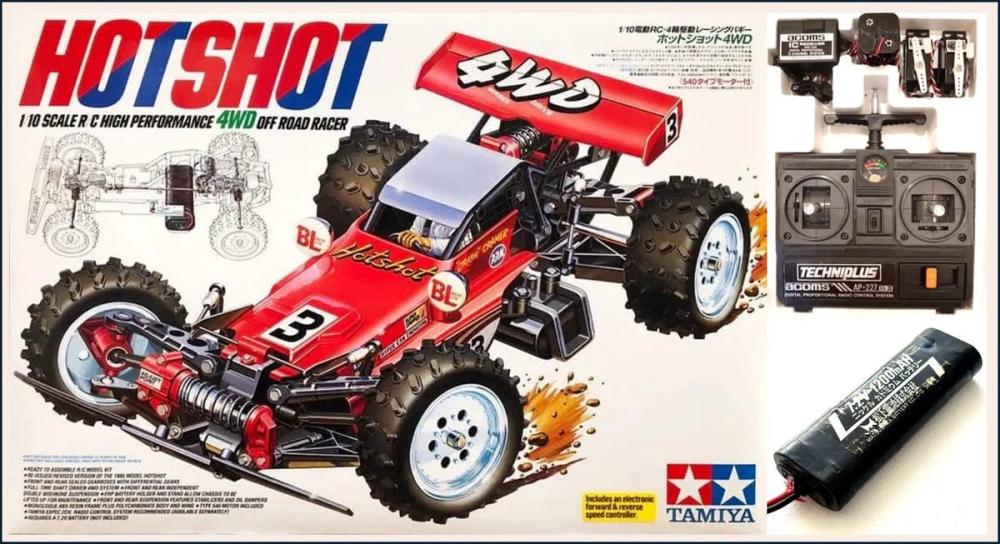
WHAT’S IN THE BOX (WARNING: SELF INDULGENT STORY AHEAD)
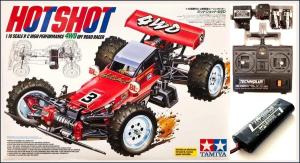
It was late 1985. I’d been poring over Toyworld catalogues, ogling the Tamiya Frog, Hornet and Hotshot. As a 15-year-old motorsports fan, they seemed the nearest thing I could get to a race car at that age. A couple of weeks later, on a family holiday, all my dreams came true. We stumbled upon a stack of Tamiya cars at the local Kmart, one of which was a Hotshot, on sale at a super-low cost. Pester power won, I convinced by rally-driver father that we must have this in our life, and we walked out with it tucked under my arm. It was a bundle deal, and we scoped it out before the purchase, so we knew exactly what came in the package: the Hotshot itself, an Acoms Techniplus stick radio, a 1200mah Tamiya NiCD battery, and a trickle charger. Perfect. Everything we needed. What I didn’t realise at the time, and in fact what I only came to understand many years later, is that there was a whole lot more that came with that Tamiya Hotshot. A whole lot more “in the box” so to speak that wasn’t marked on the package. It came with a lifetime’s worth of memories. Of different races in different places. Of chasing championships. Of late nights wrenching. Of Saturdays practicing. It came with the connections that would start as competitors but become firm, lifelong friends. I didn’t realise that my Hotshot kit contained friendships with Grant and Murray and Darren and Steve and Andrew and Chris and Greg and Tony and Matt and Scotty and many, many, many more. It came with an invitation to get involved in organizing the sport. An invitation to join club committees, and help build racetracks and help organise National Championship events and help start new clubs in new cities. Experiences that have been rewarding beyond measure. All of that was in the Tamiya package at Kmart that day. I had no idea. Unknown to me, it came with the opportunity to turn something else I enjoyed, writing, into another part of the hobby. Who knew my Hotshot bundle contained the chance to write for magazines and later social media and turn to video and podcasting and commentating and travelling around Australia and beyond. All in the box. All amazing. Packed right in there beside the radio and trickle charger and battery, and underneath the oval block tyres. And best of all, and maybe I only realised again this week how important this was, my Hotshot came with 40 years of father-son-brother relationship right there in the package. For 40 years, on and off, I’ve been racing with my dad and brother. Dad built that Hotshot, we thrashed it around the street and the park, then discovered organised racing and the rest is history. But that racing together turned out to be an extraordinary contribution to the strength of our relationship as father and son. In the first instance our partnership was typical: mechanic and annoying kid wanting to drive more. But later we worked together on the car, then added another car so we could both race (and another and another for my brothers, then more for me…you know how it goes). We travelled together, celebrating an occasional win, lamenting the regular losses. He was father, mechanic, coach, counsellor, cheerleader, and even occasionally rival. We worked together on club committees, dreaming up big races we could run. Then my father started a retail business, Heavy’s Hobbies, trading trackside and then later from a bricks and mortar store. Year’s later he did it again, Action R/C the second generation Guyatt hobby retailer. The shops were 95% dad, 5% me, but still it felt like we got to do this together. I had no idea that the potential for all of that future was in that first Tamiya Hotshot bundle. Right there under the Tamiya blister pack presentation. This year it’s 40 years since we started, but also an 80th birthday for my dad. And with huge thanks to the wonderful crew at Chargers RC, we put on an 80th birthday race, the HD80, styled on the 50th birthday race (you guessed it, the HD50) we ran back in 1996. Loads of racers and friends, old and new came out to race vintage cars, laugh together, and wish David a happy birthday and thank him for all he’s contributed to the club and the sport here in Australia. He’s already planted the seed for the HD100 in 2046, so put it in your calendar. RC racing has given me so much, so many experiences, but best of all it’s given space for Dad and I to be father and son, at so many different ages and stages of life, sharing in something special together. I know full well how fortunate I am. Not everybody has the good fortune to share in this kind of experience, or with this kind of man as a father. For me though, this week was a reminder of just how much came bundled with that Tamiya Hotshot, and how precious it has been. I wouldn’t change any of it. Maybe take a closer look inside the first kit you bought and think about what else was in there alongside the shock absorbers and turnbuckles and suspension arms. What kinds of memories and possibilities and potential and relationships and careers were hidden in there between the instruction manual and the sticker sheet. It’s amazing what they pack in without telling any of us. |
5 MOMENTS OF 2025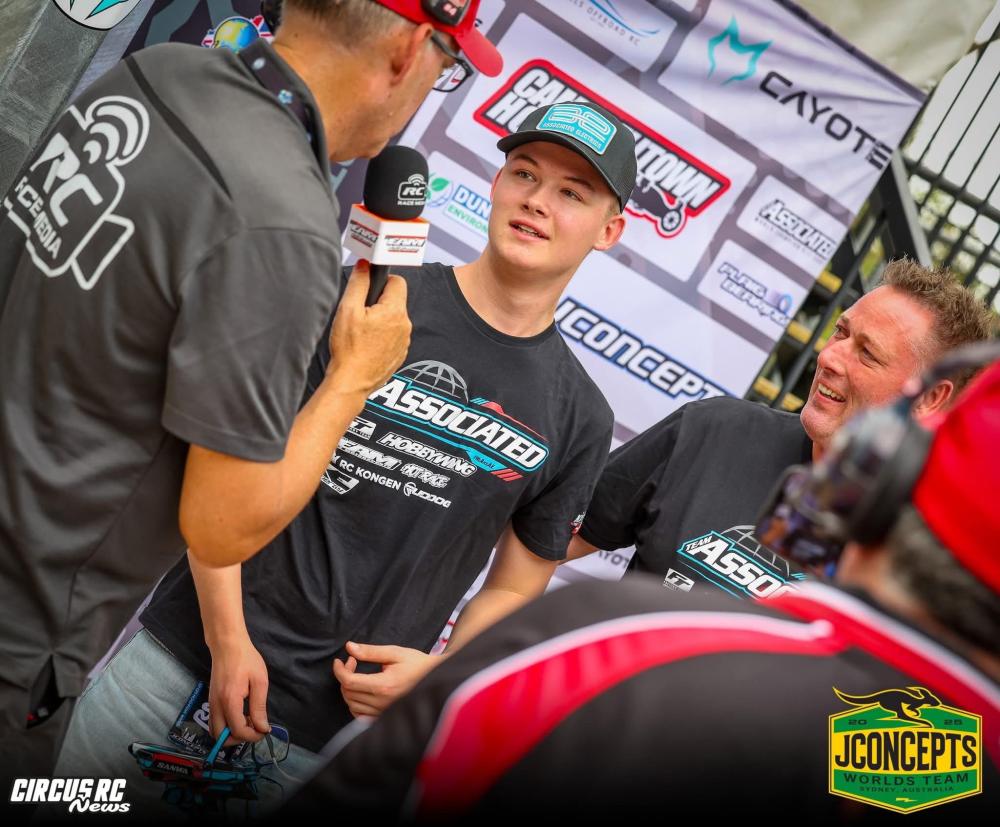
There has been so much incredible racing in 2025, and I've been privileged to stand trackside and watch a whole heap of it. Rather than recap a year's worth of events, I want to pick out five key moments from 2025 that share some of the elements I love in R/C.
1️⃣ The first I'm thinking of came in the closing laps of an EP Buggy final at the Philippine Masters. Pekko Iivonnen was leading, Davide Ongaro chasing. More than 1 million people have seen what happened next: Ongaro threw an outrageous pass attempt through the front rhythm section, Iivonnen saw it coming, waited just slightly and then turned back inside Davide who was unable to get his buggy stopped at the apex. 2️⃣ That sequence was repeated almost exactly on the final lap of A2 at the 4wd World Champs six months later, Ongaro again jumping long with an attempt to this time ambush Marcus Kaerup and send the World Champs to a decider. Kaerup, just as Iivonnen had, waited a heart beat, then turned inside an ever so slightly deep Ongaro to regain the lead, and set sail for the Championship. 3️⃣ At Pine Hills Dirt Racing, for Round 3 of the Asian Buggy Championship, second qualifier Kouki Kato tangled on lap one of the final, dropping him to the rear of the field. Within 12 minutes he had driven back to within striking distance of the lead, only for rain to intervene and cut the event short. It was a brilliant display of speed and passing, precision, and determination. We will forever wonder how his battle with Alex Bernadzik would have shaped up. 4️⃣ Earlier in the ABC series, this time in New Zealand, Australia's Jayden Edmunds was leading deep in the Nitro Buggy final, with Caleb Noble hunting him and one pitstop to complete. Edmunds' father Dave completed a perfect stop, Jayden returning and holding the lead around the outside of turn 1 by mere inches as Noble threw one final attack. That pitstop, exit, and outside line would be decisive, Edmunds going to his first international win. 5️⃣ And that reminds me of Broc Champlin vs Davey Batta down the front straight on the final lap of 2wd A1 at the World Champs. It came after Champlin and Kaerup tangled in the rhythm section, Batta seeing his chance to strike from third and coming within millimetres of driving around the outside of Champlin on the long curving front "straight" at Hills. Champlin somehow willed a tiny bit more speed from his car, and dared to brake later, holding the lead that would ultimately set him to be crowned World Champion, for the first time, later that afternoon. In those five stories, and a thousand more (Hara vs Cooke at the Vintage Bash for example?), are so many of the things I love. Ferocious competitiveness, sheer determination, intelligence under maximum pressure, inch-perfect judgement, daring to risk everything, first-time champions...and more. R/C racing is awesome, and 2025 gave plenty of reasons why. How about for you? Is there a favourite moment on or off track as we consign 2025 to the history books? I said earlier I was privileged to see a bunch of racing this year, and I meant it. What joy it is to have watched on and shared some of the stories of this thing we call R/C. Let's do it again in 2026. |
SCHUMACHER CAT PB REVIEWThere are so many potential factors behind the choice of a new race car for most of us. For some, it’s all-out performance. We’ll buy whatever we think is the outright fastest car. For others, it's local parts availability. Or quality of materials and engineering. Or brand loyalty. Or what our friends run (or what our friends don’t run…the lure of something ‘different’). Or ease of maintenance. Or price and value. Or what our favourite pro driver runs. Or some undefinable “cool” factor. Or, more likely, some combination of the above.
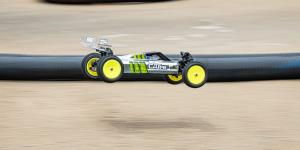
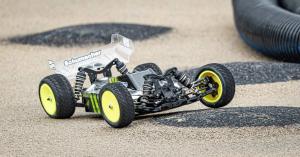
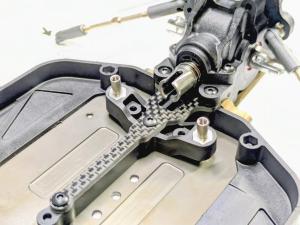
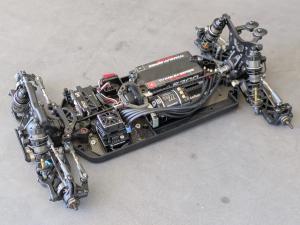
There are two reasons I was unable to resist the temptation to build and run the Schumacher R/C Racing CAT PB 4wd buggy this (down under) summer. The first is spending a week trackside at the World Championships, watching the best 10th racers on the planet go at it. I’ve spent most of my rare wheel time in the last few years steering an 8th eBuggy, but after the Worlds, the lure of their smaller cousins was strong. 10th offroad, after all, is where I started and spent so many years. And 4wd Mod 1/10th is still my all-time favourite class. Amazing to drive. Challenging to be fast. Super fun. The second is the implications of this particular buggy in the long history of the British manufacturer. It’s well documented that the CAT PB is the first time they’ve built a shaft-driven race car, and that marks a significant moment. I’ve had a long on-and-off connection with the brand, so this factor alone was enough to pique my curiosity. I have to know what this car will be like to build, to drive and to maintain. Those were enough motivation for me, and with big thanks to Schumacher, Hobbywing, and Mach-1, here we are. If you’ve been here before, you’ll know that you’re not about to read a highly technical review, where we analyse the minutiae of geometry and materials engineering. Instead, we’ll focus on the experience and our reactions to it – in the build, the tuning, the driving, and stretching to explore the electronics package we’ve assembled for this car. You’ll also know you’re starting what is inevitably going to be a long read. You know we rarely write short stories! If you prefer a video review, stick with us, that will be out in the next week or so. HISTORY AND CONTEXT In terms of the car itself, there are two versions of the kit: the CAT PB Mod Spec, and CAT PB Dirt Spec – both based around the same alloy chassis, shaft-driven layout. Naturally we’ve built the Dirt version to run in our local conditions (more on this later). The main differences between the two are in the drive-train – the Dirt version packing three fluid-filled differentials, while the Mod version (oriented to carpet and astro-turf surfaces) includes a slipper with front-adjustable brake and U/J driveshafts front rear (where the Dirt car has CVD’s up the back). There are other, minor, differences between the pair in terms of fluids, recommended starting points for setup and so on. Elsewhere, it’s new suspension geometry when compared to the previous L1R platform, plus all the modern requirements – easy access diffs, pill adjustable suspension geometry, to name a couple of focus points in the design work. We took the opportunity to add just a couple of option parts from the long list of available choices. The one-piece alloy servo mount, and the alloy front castor blocks both made the list, along with a tuning package of anti-roll bars and the latest “Agile” spring range from Schumacher house brand, Aerox. More on those later too. THE BUILD The overwhelming sense I have from this build is the quality of materials, of engineering approach, and of fit-and-finish. It’s been a minute since I last built a Schumacher car (aside from the re-released Cougar 2 Works), and there have clearly been huge strides in these areas. It’s a delight to build, and I found myself enjoying the process (even those first three jobs went fine!). What did I particularly notice? The steering assembly is beautiful, and I’m intrigued by the approach Schumacher has taken in angling the steering posts back to match the front chassis kickup, rather than the more typical approach of setting them vertically. I also appreciate the full pill-adjustable suspension geometry in the all-alloy A/B/C/D arm mounts, and the ability to play with flex using different combinations of screws and (optional) stiffeners in the central spine of the chassis. In their normal fashion, Schumacher provide all the fluids, greases and threadlocks that are called for in the build. I used those materials everywhere and have found myself quite happy with what was provided. There are a couple of places where I stumbled – essentially because having built more than a few cars over the years, I felt quite justified in taking only a cursory glance at the manual, and then getting on with the next step. That meant I missed the fine detail a couple of times – different width inner and outer wheel bearings, or different length front castor block screws, for example – and had to back-track to fix operator-induced errors. The manual is easy to follow, and quite clear on what’s required – I just chose to ignore it and paid the price. One tip I picked up elsewhere but proved helpful was in mounting the carbon radio tray. The manual calls for a threaded insert to be glued into the tray, which I did, but found it helpful to also add a dot of superglue and attach the small plastic spacer that holds the tray off the alloy chassis. On first assembly I left that spacer separate and juggled it all together, but later went back and glued it to the underside of the tray – making life much easier for the future. Finishing the package is the JConcepts S2 body – included in the kit – and my good friend Tony Gray (of Paint & Graphics by TFG) has taken on the CAT motif and produced what I think is a stunning bodyshell. I’ll include some close-ups in the photos so you can see some of the fine cat-inspired details TFG has included. Thanks Tony! We cut the supplied wing down to the second cut-line, and that proved a good starting point. The Dirt Spec kit ships with yellow wheels (fresh from a Worlds Win for Broc Champlin), or the Mod spec with white wheels. TFG's paint works well with yellow, so we will stick with that colour for a while. COMPLETING THE PACKAGE Power comes from the new Hobbywing XeRun XR10 Pro Legacy ESC (to give it its full name) and G3 7.5T modified motor. The Legacy is new to the Hobbywing lineup, slotting in just below their flagship XeRun XR10 Pro G3 but at a more affordable price point. I’m under no illusions about my ability to compete at the sharp end of national-standard fields these days, so the Legacy is an ideal option for my needs. It packs some features ideal for the club racer – reverse polarity protection, and smart fan management, for example – while still offering a host of performance-tuning features to adjust power and brake feel and performance. We’ve already started playing with some of these tuning items, more in our track test section. For its part, the G3 motor is well-established, bulletproof and performance-proven. On my local track, the quick guys are running 5.5t motors, but the 7.5 provides the ideal balance of performance and driveability that I need at this point in my driving life. The side-mounted wires on the Legacy work ideally with the CAT PB, and I’ve followed the lead of most of Schumacher’s pro drivers in mounting the ESC up front on the carbon fibre radio tray, and fitting my receiver and transponder on the right behind the servo. Speaking of servos, for me the choice is the Mach-1 RC Products M62SR steering servo (the 10th servo that joins the full-size M81SR in their servo lineup) to handle steering duties. I really like this servo. It completes the build along with Mach-1’s Titanium series HV-Lipo 6300mah pack. I’ve been using the Mach-1 servos and batteries for a while now and have been very happy with both feel, and performance. And, I have to say, I love the idea of being able to run products from an Australian company, with Mach-1 based here in south-east Queensland where I live. Tyre-wise, the Jetko J-One is the tyre of choice at our test track, so that’s what we’ve mounted up – courtesy of Speedy RC. We’ve gone with the Medium-Soft compound and with standard (supplied) closed-cell foam inserts. So far, those tyres have been a perfect match for the track surface, with excellent performance and decent life-span. THE DRIVE With this surface being somewhat unusual, I wasn’t sure what to expect, or even where to start in terms of setting up the CAT PB. When in doubt, build it to kit settings, right? So that’s what we did, following the manual for the Dirt edition build, including shock and diff fluids, geometry choices, anti-roll bars and so on. I figured I’d go from there, heading for my first track day with a fully charged electric screwdriver, full expecting to spend all day changing diffs and shocks and anti-roll bars and dialling in geometry to get the car in the window. Surprise, surprise, none of that was necessary. It shouldn’t have surprised me, I suppose. Most dirt tracks today are quite high-grip in one form or another, so with out of the box settings designed for such grip conditions, the car was well in the window. The kit diff fluids (12k/300k/12k front-to-rear), shock package and even anti-roll bars were close to the money, and I could concentrate on just re-learning the world of 10th off-road. I found a car that was delightfully neutral, easy to drive and with no bad habits. It got into the apex well, rotated well and got the power down effortlessly. It also behaved really well in the air, never getting me in trouble. For me, at this point in my driving life, those are exactly the characteristics I’m looking for. Clearly, if you want to win races, you’ll want more, and in the hands of drivers of the calibre of Broc Champlin, Michal Orlowski and Daniel Kobbevik, the CAT PB has already proven this capability. I have the feeling we’ll see a growing team here in Australia over the next few months exploring the performance envelope with this car and running up front in local conditions too. At one point, I flung the radio at one highly-credentialled driver who immediately got down to perfect lines and competitive times – and remarked afterwards just how comfortable that kit setup had been. Let me pause at this point to say a huge thanks to Steve Watts Racing Photography. Steve was trackside the day I was testing and pointed his camera at the CAT PB to capture the on-track images you can see in this review. Steve is amazing, make sure you keep an eye on all his work over at his Facebook page – and if you haven’t already, scroll back and check out his 2025 Worlds galleries – some banger shots there. DIALING IN On the electronics side, the Legacy ESC proved an ideal companion. A couple of friends lent me both the Hobbywing OTA Programmer, and the Multifunction LCD Program Box Pro at different points to experiment with settings. To deal with my return to 10th, and a “slightly” heavy trigger finger, we played with Throttle Rate Control (setting it to 20), Initial Throttle Force (2), PWM Drive Frequency (12K and 16K at different points) and tuned Brakes with both Max Brake Force at 85% and playing with both Brake Rate Control and Brake Frequency. For Boost and Turbo options, it was a gentle start, but with hopes to play more in this realm next time I make it to the track. On these first runs, I appreciated the smoothness of power delivery, and also the way we made the Brake settings work – for both in-air control and getting deep into some of Chargers' tighter corners. There are so many options to explore here, and I’m excited to keep learning what the Legacy can do. I already have a list of settings to try next time I make it to the track, starting with those Boost and Turbo options. I do have to confess, much to my embarrassment, to putting the Legacy’s claim of reverse polarity protection to the test – for the first time I can remember (must be my advancing years). The capacitor pack didn’t survive, but the ESC did – and that made my mistake a much cheaper one than would have otherwise been the case. Thank goodness. Lesson learned! THE VERDICT? I thoroughly enjoyed driving the car, and it has me itching to get back to the track for more, just as soon as possible. This car, and my return to 10th tracks, has me keen to practice, to improve, and to go racing. That’s a pretty good outcome from any build. These days I think the choice of a car for me is less about how it feels on the track, and much more about how it makes me feel when I’m driving it. On this occasion, I got both in one package. Win! Huge thanks once again to those who helped make this build possible: Schumacher, Hobbywing, Mach-1, Paint by TFG, SpeedyRC Online Store and Steve Watts Racing Photography, and to Tris, Chris and Iain for advice and borrowed equipment. |
Action RC: S2E23 - Craig Drescher
The word "Legend" is sometimes over-used...but not in the case of today's guest Craig Drescher. One of the UK's all-time greats, widely respected, many Euro and UK Championship wins, a Reedy Race or two, and very nearly a Worlds.
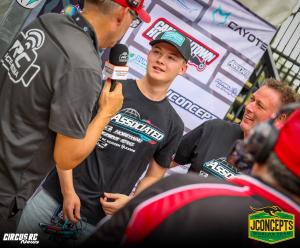
Craig's life-long loyalty to Team Associated continues today in his role as head of sales for the company in Europe and he has some interesting thoughts on the current team, and some confessions from yesteryear. There are so many great stories from across his career in this conversation and some fascinating insights into the current and future state of RC. I hope you enjoy as much as I did. We'd love to hear your feedback along the way. |